Steve Harrison
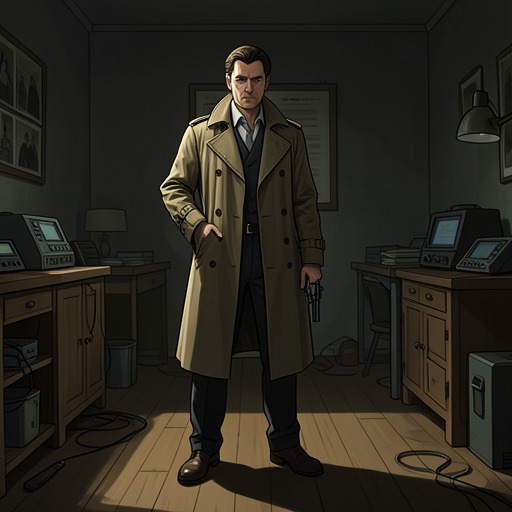
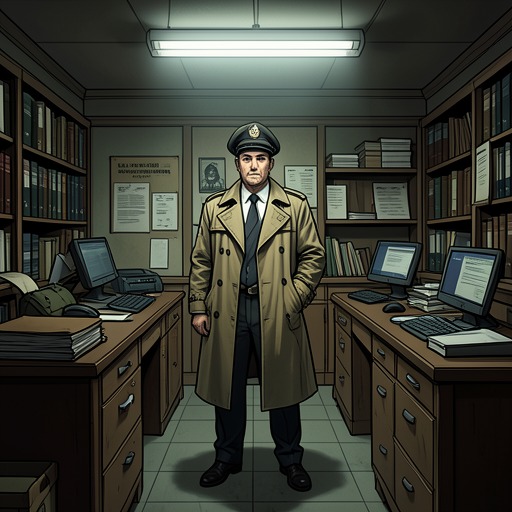
The Dark HalfSteve Harrison is a Maine State Police trooper whose role shifts from reassuring Thad Beaumont that the police are not his adversaries to reporting the violent breakdown of the protection detail around Thad and his family. Through Harrison, the case’s procedural language confronts events that make conventional explanations increasingly difficult to sustain.
Identity and Place in the Investigation
Harrison serves with the Maine State Police during the investigation surrounding Thad Beaumont and George Stark. The supplied scenes establish him as a participant in the police effort to keep contact with Thad and respond to the danger around the Beaumont family, rather than as the investigator leading the case. His appearances are brief, but they mark important changes in how the officers understand their situation: early on, he tries to establish cooperation; later, his report conveys that the police escort has failed and that Thad has escaped with his family.
The larger case has already put Thad under suspicion. Alan Pangborn explains that Homer Gamache’s truck was discovered near the New York border in Connecticut, with the perpetrator’s fingerprints among the prints recovered from it. One especially clear print was left in blood on the rearview mirror; a comparison returned Thad’s service record and fingerprints. Thad challenges the reliability and significance of the evidence, asking how many points of comparison Maine requires before a fingerprint can be admitted. Pangborn answers that six perfect comparisons are required. This dispute supplies the procedural context for Harrison’s role: the police are trying to manage both evidence that implicates Thad and a growing threat that the investigation’s available categories do not explain.
Attempts to Maintain Cooperation
At one point, Thad becomes visibly unsettled during a police conversation. Harrison tells him that the officers are not the enemy and says he wants Thad to understand that. The reassurance has an immediate practical purpose: the police need to speak with Thad, while Thad is increasingly fearful that Stark can watch or influence what he says. He answers with an explanation for how a caller might have learned that he was at the university, attributing the knowledge to a bookstore encounter and the faculty telephone directory. Rawlie DeLesseps adds a wry comment about the directory, briefly redirecting the exchange, but the underlying mistrust remains.
That mistrust shapes the next encounter. After a call ends, Thad returns to the police vehicle and Manchester asks whether everything is all right at home. Thad recognizes that the question is more than idle conversation and chooses to conceal the danger. He replies that the children are cranky and that this has made Liz cranky, then turns the attention back toward the officers by asking why they have been acting uneasy. His answer sounds casual, but he knows that something is happening and withholds it. Harrison’s assurance that the police are not the enemy therefore does not resolve the problem: Thad is still making decisions under the fear that Stark will learn what he reveals, while the officers do not have the full account of the threat.
The Escort Breaks Down
The contrast between Harrison’s earlier attempt at reassurance and his later report is stark. When Alan Pangborn calls the Maine State Police looking for Thad, Harrison says that he had intended to call Pangborn and should have done so at least an hour earlier. He describes the situation as having gone badly wrong, then explains that Thad has cut two troopers, Tom Chatterton and Jack Eddings, nearly to pieces. Harrison is angry and says that Thad has his family with him; he wants him found.
Harrison’s account presents the official crisis as a breach of the protective arrangement around the Beaumonts. The escort has not simply lost track of Thad: two officers have been injured, and Thad has left with his family. Pangborn asks how Thad managed to get away, but the available passage ends before Harrison’s answer. The scene therefore establishes the consequences and urgency of the escape without supplying its mechanics through Harrison’s report.
Evidence, Doubt, and Narrative Function
Harrison’s calls also help register the widening gap between what the police can document and what they are beginning to fear. Pangborn has reason to resist a supernatural explanation: he tells himself that a message witnessed by Fuzzy Martin proves nothing of the kind. Yet he also recalls the voice comparisons, the fingerprint evidence, and the hundreds of sparrows that crashed into the windows of Bergenfield County Hospital; the recollection leaves him violently shivering. In that sequence, Harrison’s report of the troopers’ injuries makes the danger immediate and physical, even as the larger explanation remains unsettled.
Harrison is consequently a point of contact between Thad’s private knowledge and the police account of events. Thad’s concealment shows that a protective detail cannot guarantee cooperation when he believes disclosure may endanger others; Harrison’s later report shows the cost of a security arrangement that has failed. The novel uses his changing position—from officer offering reassurance to the voice reporting a crisis—to make the limits of ordinary procedure legible without giving him knowledge that the evidence does not establish. He is neither the source of the supernatural explanation nor its interpreter; he is a working trooper caught in the moment when the case outgrows the terms in which it began.